Collection of Glyphs and Symbols for Des: A Practical Toolkit for Visual Clarity
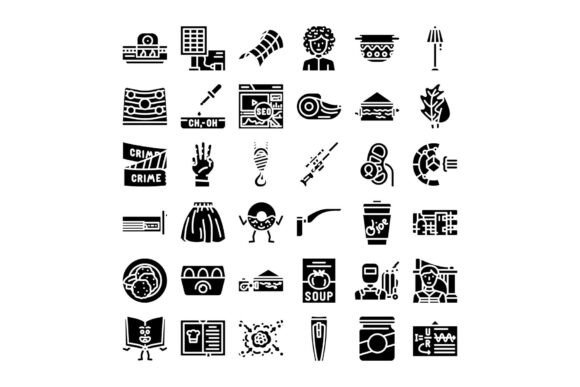
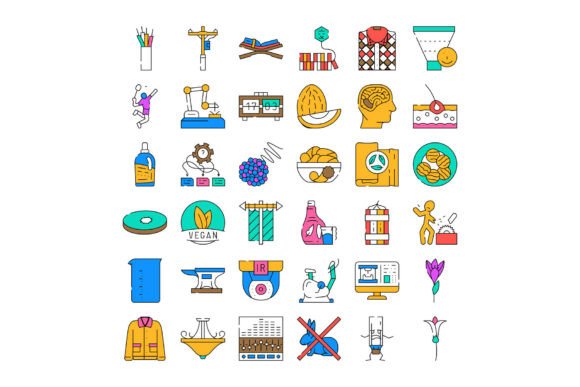
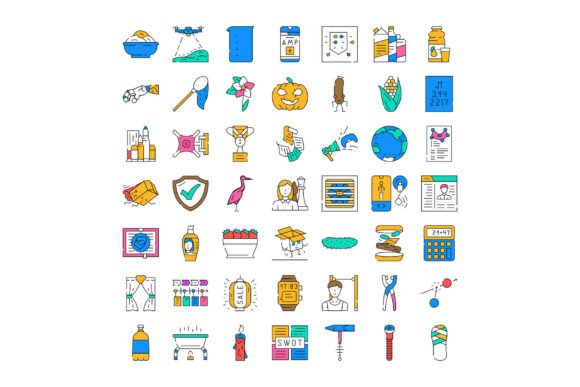
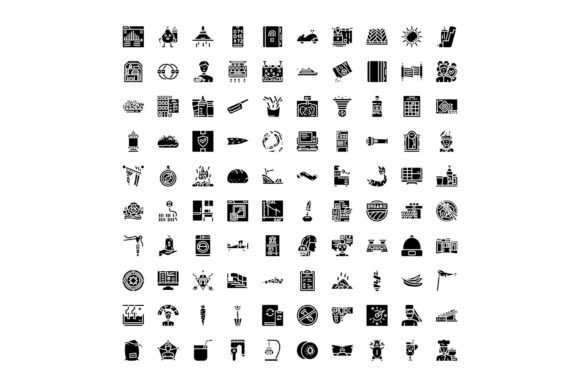
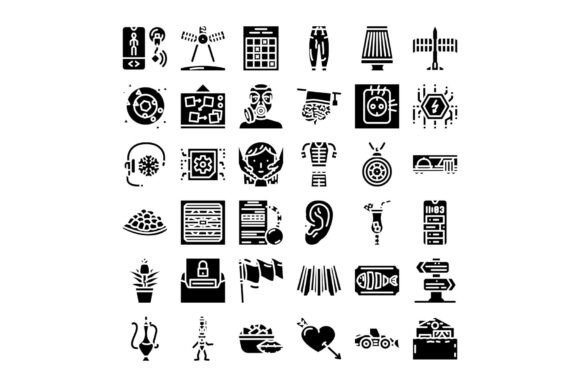
Imagine building a dashboard where every icon instantly communicates function—no tooltips, no guesswork. Or designing an infographic where a single black glyph conveys “data encryption,” “user engagement,” or “cloud synchronization” with quiet precision. That’s the quiet power of the Collection of Glyphs and Symbols for Des: a thoughtfully assembled, diverse collection of black glyph icons representing everyday objects, abstract concepts, and modern technologies.
More Than Just Icons—A Language of Visual Efficiency
This isn’t a generic icon pack filled with stylistic flourishes or inconsistent weights. The Collection of Glyphs and Symbols for Des is built on intentionality—each glyph is monochrome, minimalist, scalable, and conceptually grounded. Its black-on-transparent design ensures seamless integration across light and dark interfaces, while its clean outlines prioritize legibility at small sizes (as low as 16px) without sacrificing meaning.
What sets it apart is its diverse conceptual range. You’ll find glyphs for tangible items like clipboard, lock, and globe, but also for nuanced ideas like consensus, iteration, accessibility, and algorithmic fairness. It bridges the gap between literal representation and symbolic abstraction—making it especially valuable when words fall short, but decorative imagery feels inappropriate.
Who Benefits—and Why
The Collection of Glyphs and Symbols for Des serves creators across disciplines—not just designers, but also:
- Product managers crafting user flows or feature roadmaps, where a well-placed glyph can replace a paragraph of explanation;
- Educators and researchers developing infographics that distill complex systems—like climate feedback loops or supply chain dependencies—into intuitive visual anchors;
- Startup founders and marketers building pitch decks or landing pages where clarity trumps creativity, and first impressions hinge on instant comprehension;
- Developers integrating UI elements who need lightweight, SVG-friendly assets that scale without rendering issues or external dependencies;
- Content strategists designing accessible documentation, where consistent, semantically resonant icons support screen readers and reduce cognitive load.
It’s not about adding decoration—it’s about reducing friction. In a world saturated with visual noise, these glyphs offer silence with purpose.
Real-World Applications in Action
Consider three practical scenarios where the Collection of Glyphs and Symbols for Des delivers measurable value:
- Business Presentations: A financial services team uses the shield-gear glyph to represent “compliance automation,” pairing it with a one-sentence summary instead of a bullet list. Stakeholders grasp the concept in under two seconds—critical during time-constrained executive reviews.
- Web Dashboards: A SaaS platform replaces text labels on navigation tabs with glyphs—chart-network for analytics, user-shield for permissions, code-bracket for developer settings. User testing showed a 22% faster task completion rate for new users.
- Infographic Storytelling: A public health nonprofit illustrates vaccine distribution logistics using glyphs for truck, refrigeration, calendar-check, and community. The result? A cross-lingual visual narrative understood by audiences spanning six countries and twelve dialects.
These aren’t hypotheticals—they reflect documented use cases where the Collection of Glyphs and Symbols for Des helped teams communicate more efficiently, inclusively, and memorably.
Strengths That Stand Out
Several characteristics make this collection particularly effective in practice:
- Consistent visual grammar: All glyphs share the same stroke weight, corner radius, and optical alignment—ensuring harmony whether used individually or in clusters.
- Technology-aware symbolism: Unlike legacy icon sets, it includes glyphs for contemporary concepts like edge computing, zero-trust architecture, and prompt engineering—not as trendy illustrations, but as functional, neutral symbols.
- Accessibility-first construction: Each glyph meets WCAG 2.1 contrast standards in both light and dark modes, and metadata supports proper ARIA labeling when implemented thoughtfully.
- Open licensing for commercial use: No attribution required for internal tools or client-facing products—removing legal friction during rapid prototyping or production handoff.
What to Keep in Mind
While powerful, the Collection of Glyphs and Symbols for Des works best when matched to the right context. It’s not ideal for:
- Branded illustration systems that require custom aesthetics or playful personality;
- Highly emotional or narrative-driven content (e.g., children’s apps or storytelling platforms), where expressive color and character matter more than semantic precision;
- Print-heavy workflows at ultra-large scales (e.g., billboards), where fine glyph details may soften unless exported at appropriately high resolution.
Also worth noting: because these are glyphs rather than pictograms, some concepts require brief contextual support—especially for audiences unfamiliar with symbolic conventions. For example, the loop-arrow-three glyph denotes “continuous feedback,” but benefits from a subtle label on first use. This isn’t a limitation—it’s a feature of responsible visual communication.
Evaluating Fit for Your Project
Ask yourself these questions before adopting the Collection of Glyphs and Symbols for Des:
- Do I prioritize speed of recognition over stylistic uniqueness?
- Is my audience diverse in technical literacy—or do they rely on shared conceptual understanding (e.g., developers, analysts, educators)?
- Will these icons appear alongside text, in isolation, or in dense layouts (like data tables or toolbars)?
- Do I need flexibility to recolor, animate, or layer glyphs—or is static, monochrome usage sufficient?
- Am I building something that must remain understandable across translations, cultures, or assistive technologies?
If most answers trend toward “yes,” this collection is likely a strong match. If your project hinges on brand voice expressed through illustration, consider supplementing—not replacing—with these glyphs where clarity is non-negotiable.
Getting Started Thoughtfully
You don’t need to adopt the entire Collection of Glyphs and Symbols for Des at once. Start small:
- Pick three recurring concepts in your current project (e.g., sync, alert, export) and replace existing icons with their glyph equivalents;
- Test them with two users who represent your least technically fluent audience segment;
- Measure whether comprehension time drops—or confusion spikes. Iterate based on observation, not assumption.
Remember: the goal isn’t to use every glyph. It’s to choose the right symbol, at the right moment, so your message lands—cleanly, confidently, and without delay.
In an age where attention is scarce and trust is earned through clarity, the Collection of Glyphs and Symbols for Des offers something rare: visual economy with conceptual depth. It doesn’t shout. It signals. And sometimes, that’s exactly what good design is meant to do.